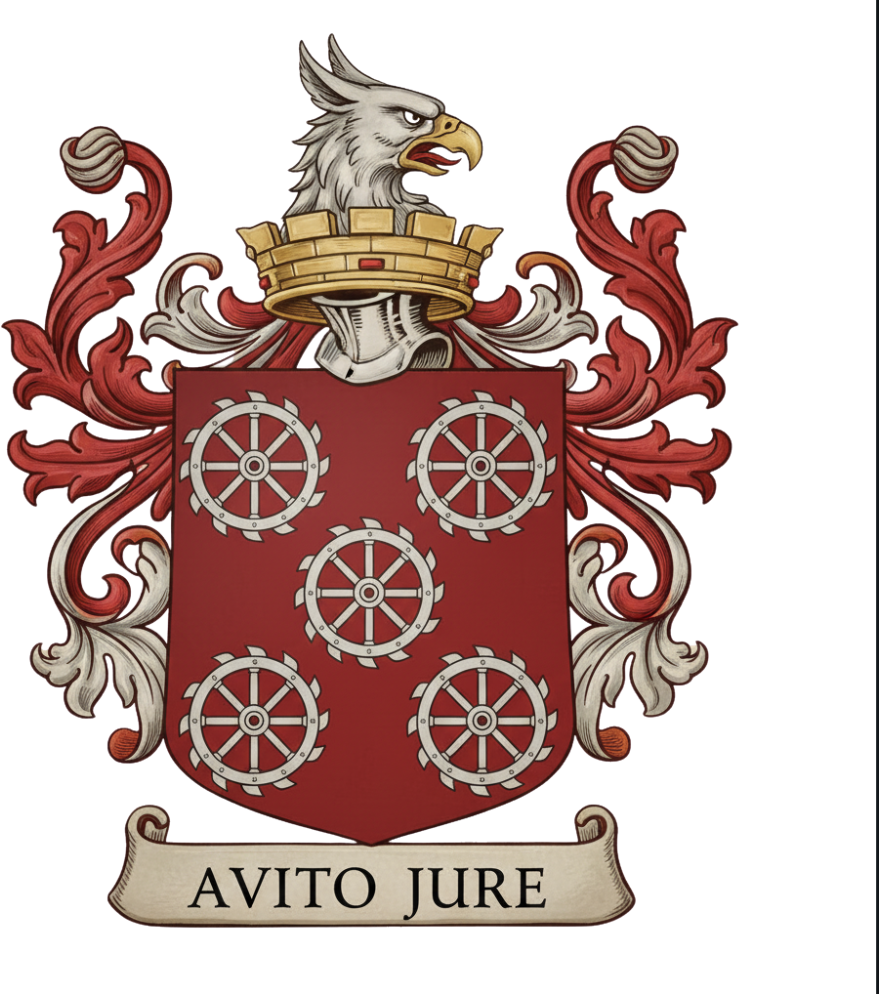

This week’s Wheeler update is equal parts progress and reality-check.
What I finished#
I have completed my SAR supplemental application using my documented lineage from Solomon Wheeler. The remaining work is the harder, more interesting part: locking down proof that the “Deputy Sheriff Solomon Wheeler” in Revolutionary-era New Hampshire records is the same man as my 4th great grandfather.
That identity link is the hinge. Without it, “Deputy Sheriff Solomon Wheeler” is a strong lead—but still just a lead.
Why the deputy sheriff angle matters#
The SAR recognizes patriotic service that can be military, civil, or other overt support of Revolutionary governments during the accepted service period. :contentReference[oaicite:0]{index=0}
So if the Deputy Sheriff in these documents is my Solomon, it potentially provides a qualifying service path that fits the historical reality: plenty of Patriots served their communities through courts, enforcement, oaths, and local government machinery rather than marching in militia ranks.
The two documents that put “Solomon Wheeler” on the record#
1) Exeter, New Hampshire — April 1777 (Rockingham County)#
The Morgan Library & Museum catalog describes a document addressed to the Rockingham County sheriff (or deputy), and notes an autograph note on the verso by Deputy Sheriff Solomon Wheeler, dated 23 April 1777, describing a search and forwarding a prisoner in a counterfeiting-related case. :contentReference[oaicite:1]{index=1}
2) Raymond, New Hampshire — April 1783 (Rockingham County)#
The Gilder Lehrman Institute catalog describes an investigation/dismissal document dated 7 April 1783 (with Josiah Bartlett involved as justice of the peace) and notes it was also signed by Deputy Sheriff of Rockingham County Solomon Wheeler. :contentReference[oaicite:2]{index=2}
Action taken: I have ordered the 1783 investigation from the Gilder Lehrman Reference Department so I can work from the actual document image/text, not just the catalog description.
The problem I’m still solving#
Rockingham County is in southeastern New Hampshire. My Solomon is tied (later, at least) to Westmoreland, Cheshire County, in the southwest. Names repeat, people move, and “rare” is not the same as “unique.”
So here’s the working hypothesis:
The Deputy Sheriff named in 1777 and 1783 is my Solomon Wheeler, and there’s a paper trail connecting him from Massachusetts/New Hampshire origins to later life in Westmoreland.
It’s plausible—but genealogy doesn’t run on plausibility. It runs on receipts.
What I’m doing next#
- Get and analyze the 1783 Gilder Lehrman document for identifiers: residence, signature comparison, associates, context clues. :contentReference[oaicite:3]{index=3}
- Pull the Morgan document image/details and look for the same: signature, jurisdiction language, people involved. :contentReference[oaicite:4]{index=4}
- Build the bridge records: Rockingham court/sheriff material, deeds, tax lists, and any appointment/commission entries that tie a Solomon Wheeler to a place and time that fits my Solomon’s timeline.
- Correlate, don’t assume: I’m looking for at least one “slam-dunk” connector (wife’s name, consistent residence, distinctive signature, or a chain of records that removes ambiguity).
Sources#
- “Document signed: Exeter, N.H., … Includes an autograph note by Deputy Sheriff Solomon Wheeler, dated Apr. 23, 1777,” The Morgan Library & Museum (catalog record). :contentReference[oaicite:5]{index=5}
- “Investigation and dismissal of the complaint of Nathaniel Weare…,” 7 Apr 1783, Gilder Lehrman Institute of American History, GLC00450 (catalog record). :contentReference[oaicite:6]{index=6}
- “Sons of the American Revolution (SAR) Application Preparation Guide (APG),” National Society SAR (notes civil capacity service and accepted service period). :contentReference[oaicite:7]{index=7}
- “Step 1,” National Society Sons of the American Revolution (accepted service period statement). :contentReference[oaicite:8]{index=8}