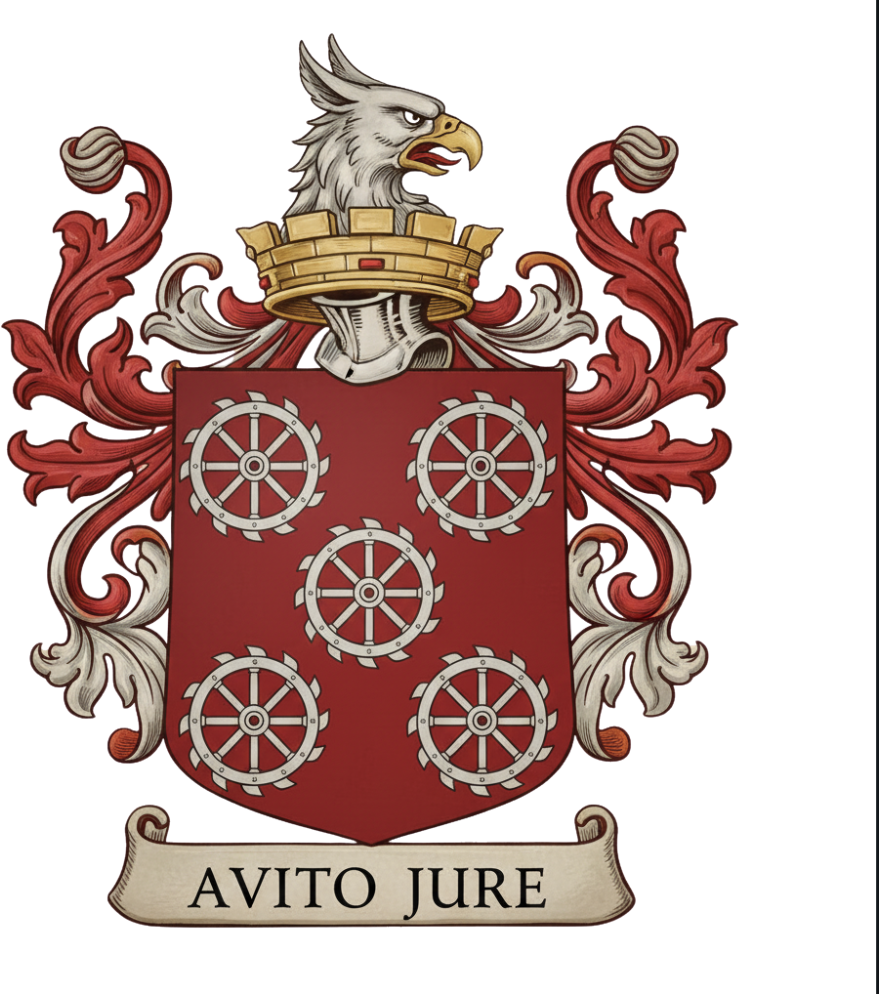
For years I’ve joked (only half joking) that my tree has “every surname except Wheeler” showing up in Revolutionary service.
Then I started pulling on a thread that may finally change that.
The Wheeler in question#
The ancestor I’m investigating is Solomon Wheeler, born 22 Feb 1747 in Shrewsbury, Worcester County, Massachusetts, married to Zipporah Harrington.
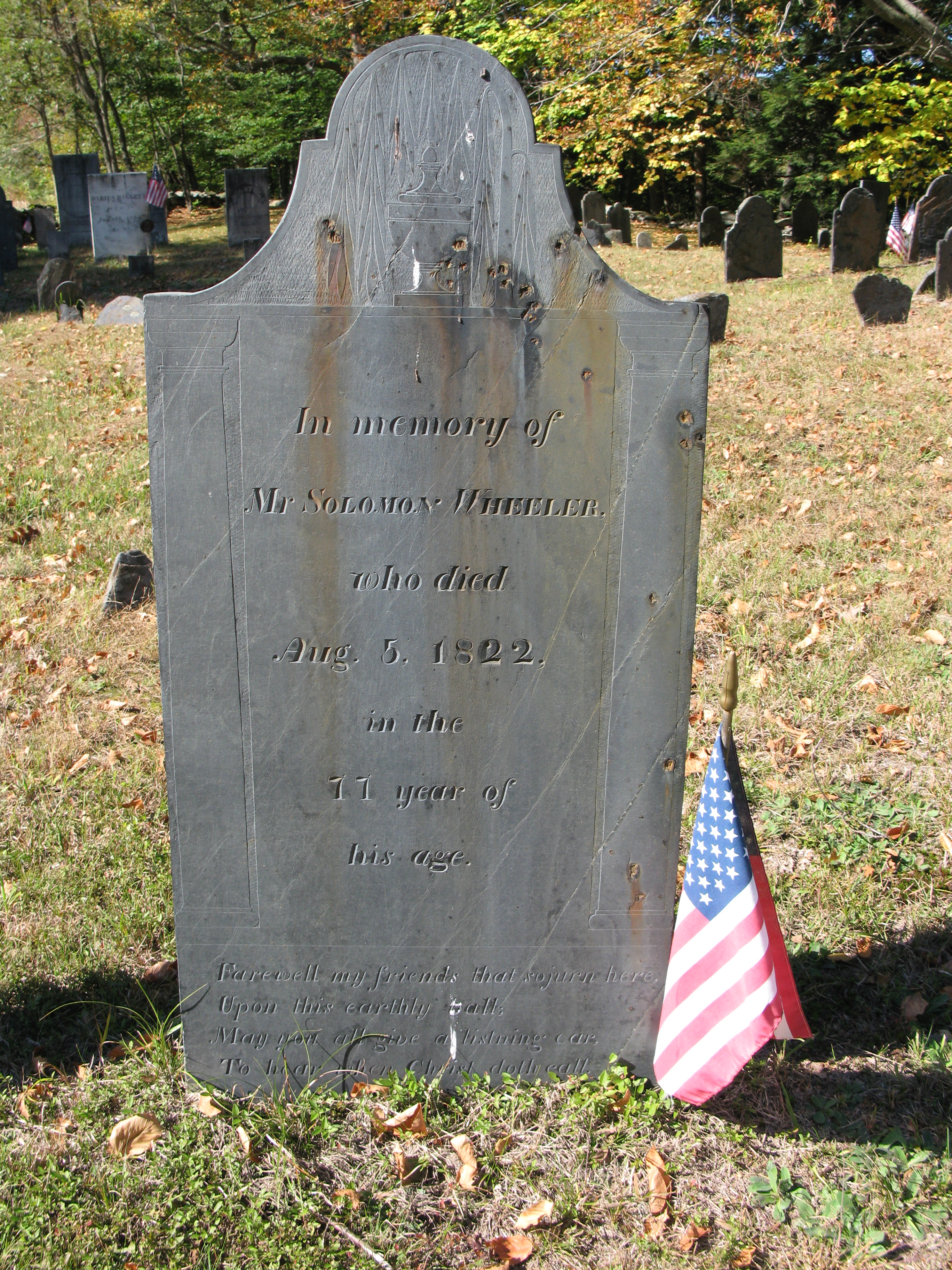
He later appears in Westmoreland, Cheshire County, New Hampshire, where he is buried in Canoe Cemetery.
Headstone (Canoe Cemetery, Westmoreland, NH)#
“No militia” doesn’t mean “no service”#
Solomon does not appear (so far) as a militia soldier in the way many Patriots do.
But SAR doesn’t require militia service. SAR recognizes qualifying civil service during the Revolutionary period. That category includes work that kept local government, courts, and law enforcement functioning while the war was underway.
The document trail that made me sit up straight#
I found Revolutionary-era documentation referring to a Solomon Wheeler performing official civil/law-enforcement activity in New Hampshire in 1777.
One item describes a warrant out of Exeter, New Hampshire, addressed to “the Sheriff of the County of Rockingham, his under Sheriff or Deputy,” related to the arrest of a man suspected of counterfeiting. The description notes an autograph note by Deputy Sheriff Solomon Wheeler, dated 23 April 1777, reporting what he did and how the prisoner was forwarded onward.
A second reference points to civil judicial service: a warrant dated 13 April 1777 issued by Justice of the Peace Solomon Wheeler to bring a defendant to Exeter, New Hampshire.
Taken together, these records point to a Solomon Wheeler serving in an official civil capacity during the Revolutionary era.
The honest gap: proving which Solomon Wheeler#
Right now, these documents prove a Solomon Wheeler served as a deputy sheriff (and/or justice of the peace) in New Hampshire in 1777.
What I still need to prove is that this Solomon is my Solomon: Solomon Wheeler (b. 1747 Shrewsbury, MA; married Zipporah Harrington; later in Westmoreland, NH).
That proof will likely come from:
- an appointment/commission record naming the deputy sheriff (and ideally his residence),
- court/county records that tie the deputy sheriff to known family members,
- land/tax/probate records placing Solomon in the right place at the right time,
- and (if needed) signature comparison across documents.
Why I’m doing this now#
The timing feels right. As we move toward the 250th anniversary of American Independence (1776–2026), it’s fitting to revisit the question and document it properly — the way a supplemental application deserves.
If this turns out the way I hope, it won’t just be “a Wheeler.” It’ll be a Wheeler who served in the unglamorous but essential machinery of law and government during the Revolution.
Next steps (research plan)#
- Identify the exact office/commission record for Solomon Wheeler in Rockingham County (or the state/county authority that appointed him).
- Pull Rockingham County court materials that might name the deputy sheriff or justice of the peace more fully.
- Build a tight timeline for my Solomon (Shrewsbury MA → New Hampshire) using deeds, tax lists, probate, and town records.
- Correlate every mention of “Solomon Wheeler” in 1770s New Hampshire to eliminate same-name conflicts.