Why this post exists#
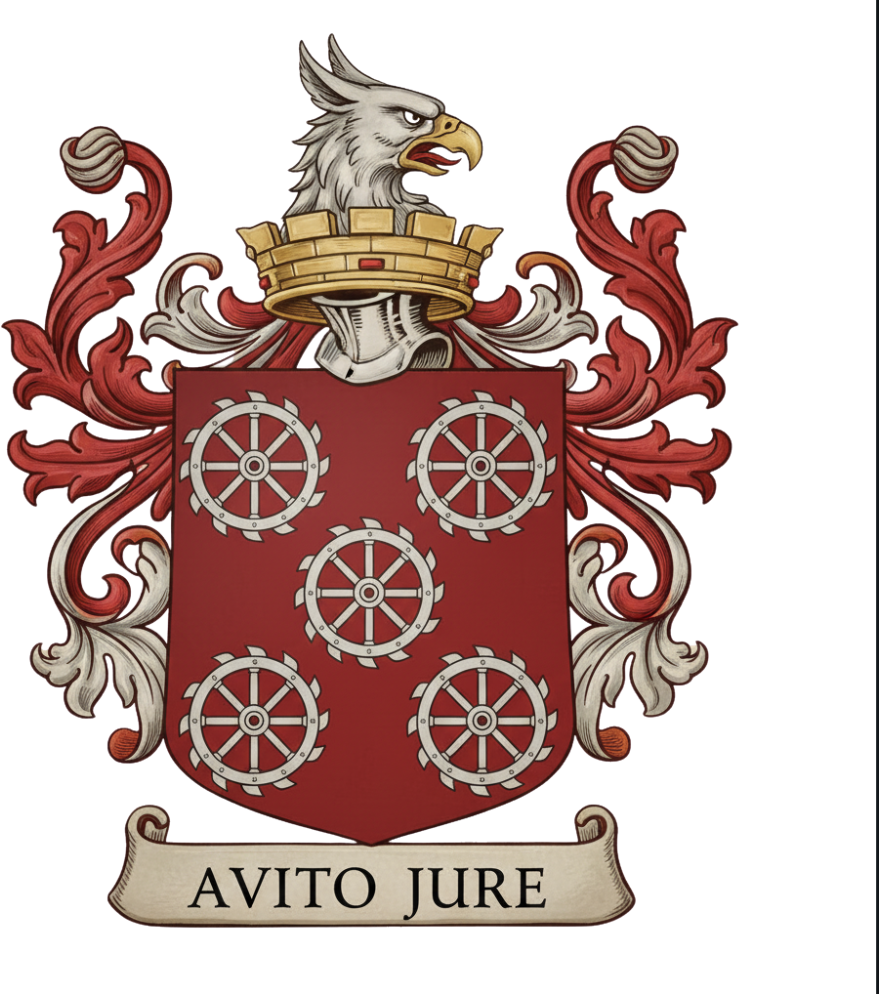
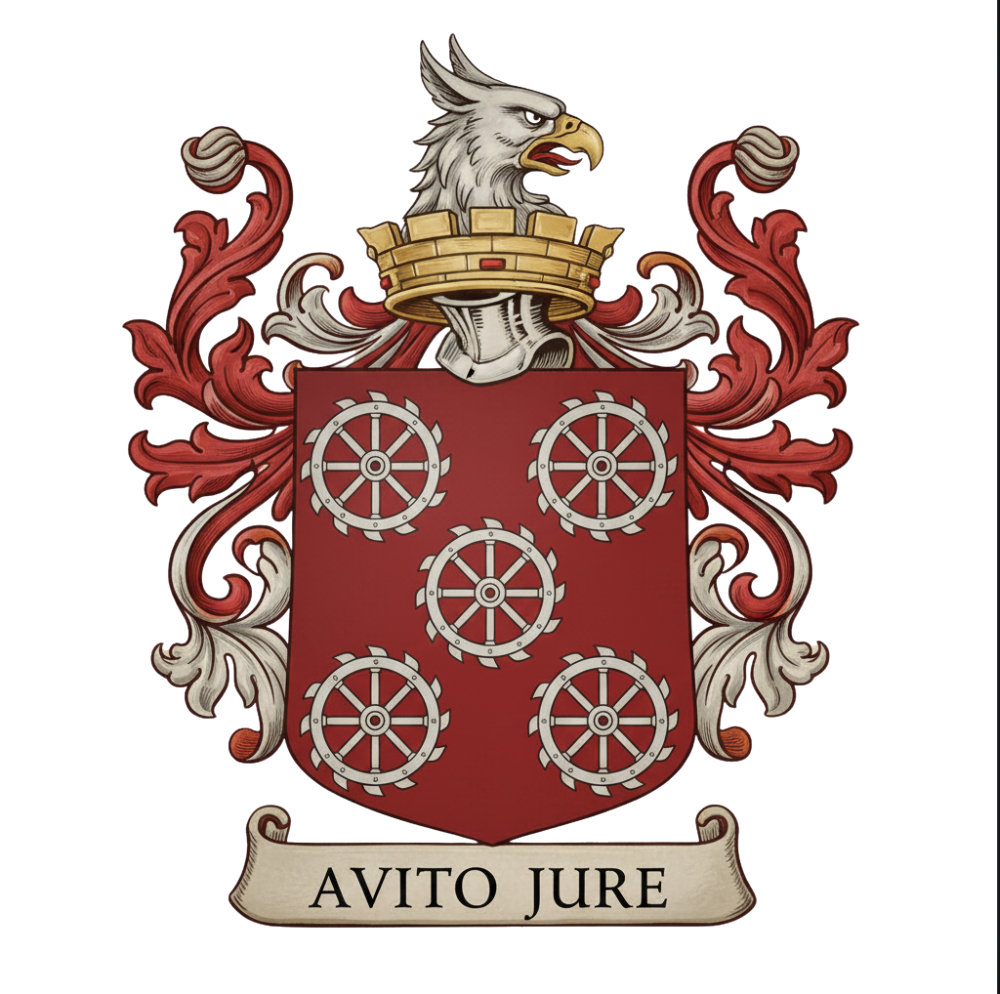
You may notice a crest in the site header. My Wheeler line traces to Bedfordshire, and it’s believed this coat of arms is associated with that line. I’m using it as a visual identity mark for the project while continuing to document the proof trail.
The crest image#
A note on heraldry#
Traditionally, coats of arms are granted to individuals and inherited under specific rules, not assigned broadly to surnames. So this is best treated as a working hypothesis until the documentation is fully nailed down.
Symbolic Connection to the Wheeler Line#
For a family like the Wheelers, who were established landowners (yeomen) in Bedfordshire for centuries before many of them ventured to the American colonies, the motto reflects a sense of deep-rooted stability. Even after moving to the “New World,” keeping this motto was a way of honoring their deep English heritage.
The Catherine Wheels#
The Catherine Wheel is one of the most distinctive and meaningful symbols in heraldry. In the case of the Wheeler family, its presence on your coat of arms is both a clever visual pun and a deeply religious tribute.
- The Visual Pun (“Canting Arms”) In heraldry, there is a tradition called “canting arms”—which is essentially a visual pun on the family’s name.
Because the surname Wheeler comes from the occupation of a wheelwright (someone who makes and repairs wheels), the use of wheels on the shield was a natural choice to identify the family at a glance.
- The Story of Saint Catherine The specific type of wheel shown is the Catherine Wheel, named after Saint Catherine of Alexandria, a 4th-century martyr.
The Miracle: According to legend, the Roman Emperor Maxentius ordered Catherine to be tortured to death on a giant, spiked “breaking wheel.” However, when she touched the wheel, it miraculously shattered into pieces, sparing her from that specific death (though she was later beheaded).
The Symbolism: In heraldry, the Catherine Wheel became a symbol of divine protection, resilience, and faith in the face of trial. By choosing the spiked Catherine Wheel instead of a standard wagon wheel, the family signaled that they were not just laborers, but people of faith and standing.
- Connection to Your Ancestor For your ancestor John Wheeler of Cranfield, who lived during the mid-1500s, this symbol would have been well-known. Cranfield and the surrounding Bedfordshire area were deeply religious, and Saint Catherine was a popular patron saint for scholars and those in trades.
While John Wheeler was a yeoman (a high-status farmer), the adoption of these arms by his descendants—including the branch that settled in America—connected the family to a “gentle” status. It transformed an occupational name (Wheel-maker) into a noble identity (Protectors of the Faith).
What I’m looking to confirm#
- Which Wheeler individual the arms were granted to (or first recorded with)
- The exact blazon (formal description) and source reference
- The inheritance path that connects the arms to this Wheeler line
If you can help#
If you have references for Wheeler arms in Bedfordshire (visitations, grants, burke/fairbairn entries, parish records, etc.), please reach out via the Contact page.